


As electronic devices become smaller, more portable, and increasingly indispensable in daily life, the demand for components that can easily adapt to complex shapes and environments has surged. Flexible Printed Circuits (FPC) and Flat Flexible Cables (FFC) are leading this transformation in the electronics industry, offering unprecedented design flexibility and performance enhancements.
However, the potential of FPC and FFC extends beyond flexibility. By redefining connectors and devices, they are paving the way for a new generation of electronics that are more efficient, reliable, and capable of meeting the stringent demands of modern applications.
The Rise of Flexible Electronics
Understanding the rich characteristics of FPC and FFC is key to unlocking their full potential and future design possibilities. These advanced interconnect solutions are designed to deliver exceptional flexibility and compact integration, making them the preferred choice for optimizing design adaptability. By etching copper conductors onto flexible substrates, FPC enables complex circuits, while FFC embeds multiple flat conductors within flexible insulating materials. These features collectively provide unparalleled flexibility, smaller sizes, and lighter weights, making them ideal for applications with space constraints and complex shapes.
To effectively utilize FPC and FFC, careful consideration must be given to design complexity, manufacturing precision, cost, and long-term reliability. Optimal performance depends on meticulous design practices, with particular attention to conductor width, spacing, material selection, and bend radius to prevent signal degradation and ensure reliability. Advanced manufacturing techniques and stringent quality control measures ensure consistent quality.
Precision Manufacturing Processes
The FPC manufacturing process involves applying a thin copper film onto a flexible substrate, etching it to form fine conductive pathways. An insulating layer and protective layer are then laminated onto the etched copper to create a durable structure. FFC, on the other hand, laminates conductive layers between insulating materials, making the process simpler. Unlike FPC, FFC does not require an etching process. This simplified production method has driven the widespread adoption of standard FFC options, such as those offered by Premo-Flex. The final step for both FPC and FFC involves bonding with other components using soldering or adhesives to ensure secure connections.
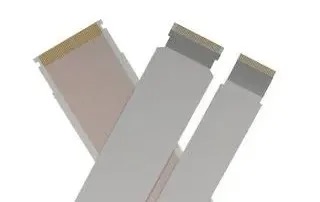
▲Premo-Flex Flat Flexible Cable (FFC)
Current Applications
FPC and FFC are widely used across industries due to their flexibility and miniaturization capabilities. Their precision manufacturing and targeted design make them ideal for consumer electronics such as smartphones, tablets, and wearable devices. In the automotive sector, FPC and FFC are integral to advanced driver assistance systems, infotainment systems, cameras, lighting, manufacturing, and assembly. In the medical field, these technologies are commonly used in diagnostic equipment and wearable health monitors. In industrial automation, robotics, and aerospace, FPC and FFC are valued for their reliability and performance in harsh environments.
By focusing on process details, FPC and FFC can support a wide range of practical applications and ongoing technological advancements, driving significant changes in the field of miniature connectors.
Adding Flexibility to Connector Design
Integrating FPC and FFC into connector designs enables groundbreaking product innovations. Increasingly, connector designs incorporate FPC and FFC as flexible extensions (referred to as "tails"), whose slim profiles reduce the connector's footprint, enabling more compact product designs. Connectors with FPC or FFC tails can achieve precise bending, enhancing product durability. Integrating FPC and FFC simplifies assembly processes, reduces the number of components in devices, and offers easier handling compared to rigid cables.
Innovative Shapes and Designs
The inherent flexibility of FPC and FFC drives innovative connector designs previously unattainable, pushing the boundaries of electronic interconnects. Their exceptional product features include:
Zero Insertion Force (ZIF)
Using FPC and FFC contacts, ZIF connectors are now more reliable and user-friendly. These connectors ensure gentle and secure contact with mating interfaces, simplifying manufacturing processes, reducing wear, and extending connector lifespan.
Foldability
Foldable devices like smartphones and tablets require connectors that can withstand repeated bending and flexing without compromising performance. FPC and FFC are crucial for ensuring reliable, flexible, and durable designs.
These examples clearly demonstrate how FPC and FFC open up new possibilities for connector and device design. However, additional engineering strategies are required to fully leverage their advantages.
Addressing Design and Manufacturing Challenges
To fully realize the potential of FPC and FFC technologies, engineers and manufacturers must carefully address complex design considerations and manufacturing challenges.
1 Design Challenges
Designing complex circuit patterns within the limited space of FPC or FFC is a challenge that requires careful planning and routing software to organize signal paths and minimize crosstalk. Maintaining high-speed signal integrity on flexible substrates is particularly difficult due to impedance variations and crosstalk, requiring engineers to adopt controlled impedance designs, select appropriate materials, and perform careful modeling. Additionally, mitigating EMI/EMC requires suitable shielding materials, conductive adhesives, and precise layout practices.
2 Manufacturing Challenges
The complexity of FPC and FFC requires precise multilayer alignment. Advanced manufacturing equipment, accurate alignment markers, and optical alignment systems are critical for optimizing precision. Ensuring material compatibility is also essential, necessitating comprehensive material testing and optimized bonding processes to address compatibility issues.
3 Reliability Challenges
Products using FPC and FFC are still susceptible to fatigue failure from repeated bending and flexing. However, flex life testing and careful material selection can significantly improve fatigue resistance. Similarly, exposure to moisture or chemicals can cause corrosion, reducing performance, but protective coatings, hermetic sealing, and corrosion-resistant materials can mitigate these risks. Extreme temperature fluctuations can also affect the mechanical and electrical performance of FPC and FFC, but using materials with wide operating temperature ranges and thermal management techniques can address these issues.
Addressing just one of these areas is insufficient. The successful implementation of flexible components relies on comprehensive and in-depth consideration of engineering and manufacturing processes.
Molex Leading the Flexible Connector Technology Trend
Molex is at the forefront of flexible connector technology, offering a comprehensive range of high-performance FPC and FFC solutions. The Easy-On FFC/FPC connectors demonstrate the company's commitment to developing customer-centric solutions. With a wide range of pitch sizes, circuit counts, and actuator types, designers can create highly customized and efficient products. These connectors deliver exceptional performance in harsh environments, making them ideal for consumer electronics, mobile devices, and automotive applications.
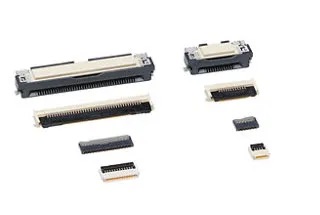
▲Easy-on FFC/FPC Connectors