


A world of dazzling colors and vibrant lights has become an indispensable element of our daily lives. Although we often take it for granted, it is, in fact, a fundamental necessity. In smart devices, optical sensing has become an invisible yet essential feature of these products.
1. Solving Smartphone Photography "Corner Cases"
Photography, as one of the most highly valued smartphone features by consumers, has always been a battleground for major smartphone manufacturers. Among these, the focusing process is critical, requiring the sensor to accurately determine the distance to the object. ams OSRAM's dToF (Direct Time-of-Flight) technology acts like a precise timekeeper, breathing new life into smartphone photography.
The working principle of dToF technology involves emitting laser pulses and calculating the distance by measuring the time it takes for the pulse to return to the sensor. Light, traveling at a speed of 300,000 kilometers per second, serves as the most reliable messenger, delivering precise positional information to the smartphone camera system. This direct time measurement method significantly reduces errors compared to traditional indirect measurement methods, thereby improving accuracy.

In low-light environments where light is scarce, traditional autofocus systems often struggle to capture enough detail for accurate focusing. However, dToF technology, with its high sensitivity to weak light signals and rapid response capabilities, can quickly lock onto the focus even in near-darkness, ensuring clear images. Additionally, when dealing with moving objects, dToF technology can track their movement in real-time and adjust the focus instantly, significantly reducing blurriness caused by focus delays.
ams OSRAM's single-point and multi-point dToF technology not only enhances smartphone photography in complex environments but also elevates the art of mobile photography to new heights. It allows photography enthusiasts to effortlessly capture fleeting moments of beauty in a world of ever-changing light and shadow, preserving memories with clarity and stability.
2. TMF8806: A New Arrival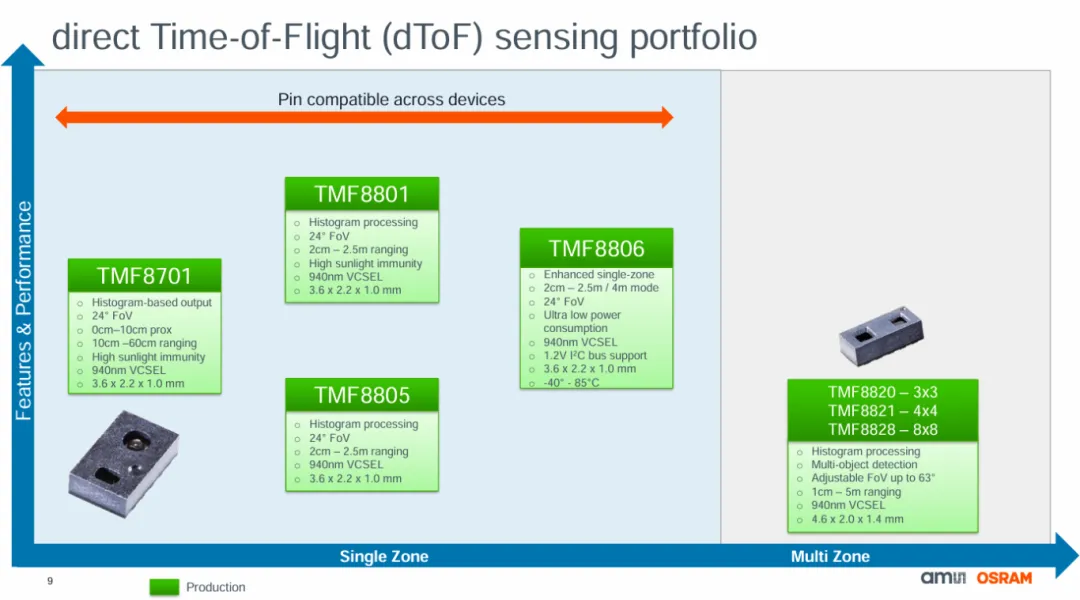
The TMF8806 is a newly launched dToF product from ams OSRAM, featuring a compact size (3.6mm × 2.2mm × 1.0mm). Thanks to its ultra-short light pulse technology, broader detection range, and energy-efficient design, it enables fast, low-power measurements to deliver precise distance readings in any environment.
With enhanced single-zone detection capabilities, the TMF8806 can detect distances ranging from 1cm to 2.5m in standard mode, and up to 5m in long-range mode, further expanding the application scope of dToF products.
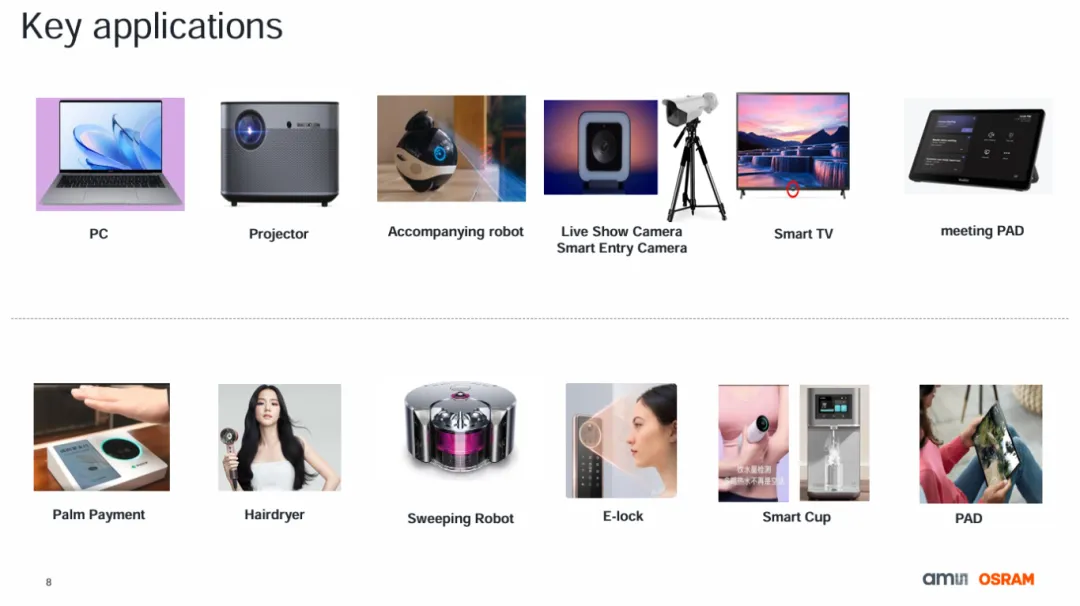
Beyond smartphones, dToF products have a wide range of applications. In laptops or tablets, they can enable human presence detection to protect user privacy and support gesture recognition. In projectors, they can facilitate fast focusing and keystone correction. In various robots, they can be used for obstacle detection and edge detection. In smart water bottles and dispensers, they can measure water levels.
Additionally, dToF products play a crucial role in reducing power consumption for terminal devices. In the era of "AI+" development across various fields, the demand for power is growing, making energy efficiency an increasingly urgent and practical need. dToF products can help reduce power consumption, such as in presence detection for smart locks and payment systems.
3. A Century of Craftsmanship: Paving the Path to Leadership
With over 110 years of expertise in optical system design, ams OSRAM has consistently led the optical sensor market.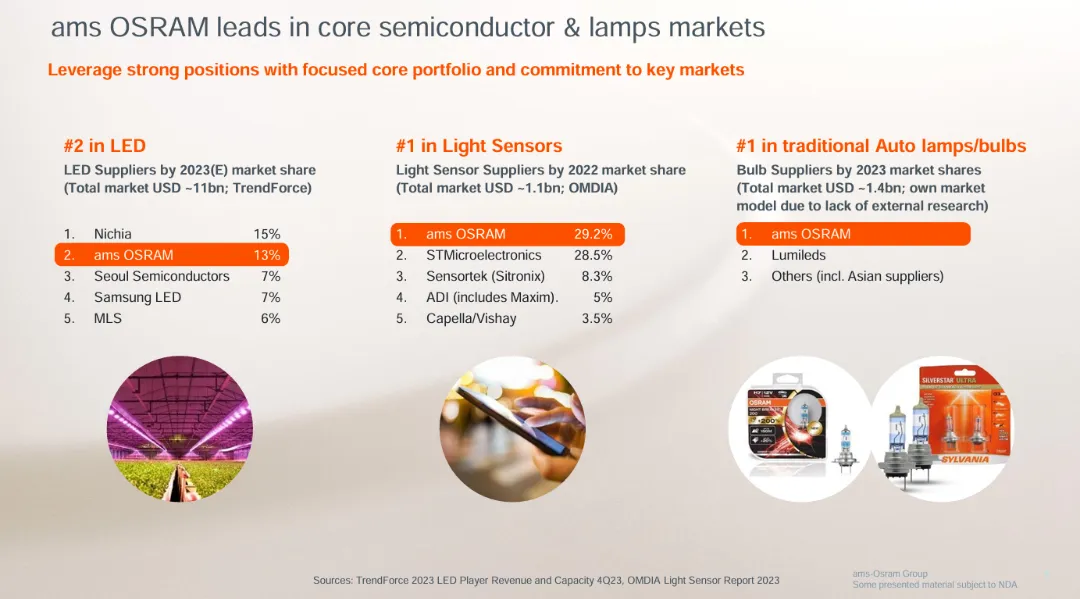
In the visible light spectrum alone, there are three main categories of products: optical sensors for detecting ambient light brightness, color temperature, and spectrum.
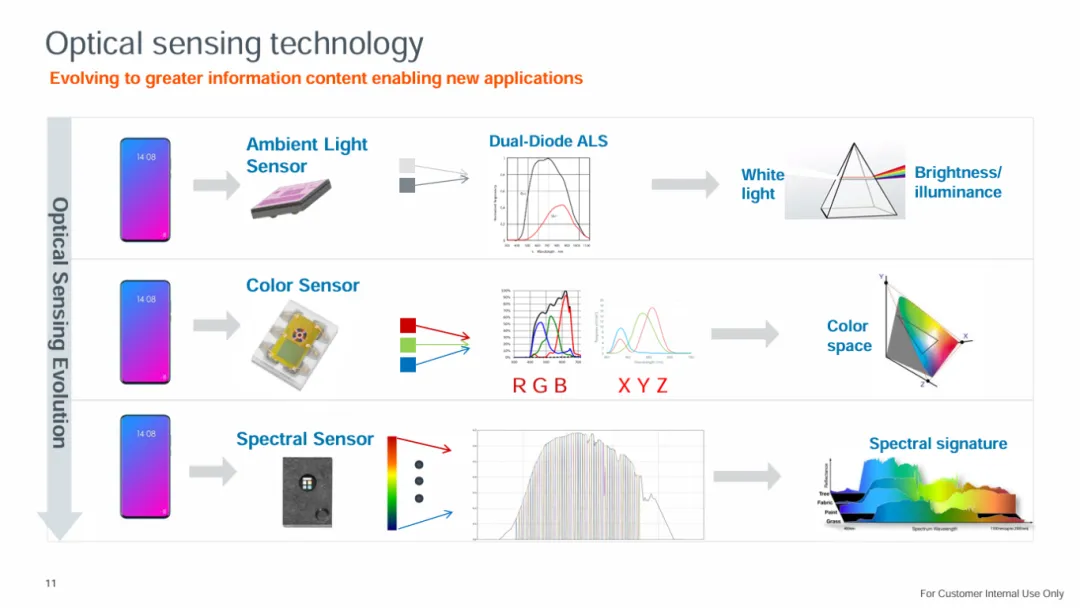
Among these, ambient light sensors are devices that detect the intensity of surrounding light. From automatically adjusting display brightness to optimize visual experience to enabling smart energy savings, ambient light sensors meet diverse application needs with their various types and operating principles.
In the visible light domain, ams OSRAM also offers spectral sensors with up to 10 channels. These sensors use advanced algorithms to reconstruct the spectrum of ambient light, capturing every nanometer of spectral data. This functionality is widely used in professional cameras.
Especially in today's action cameras, outdoor sports scenarios are often highly complex. For example, skiers and divers frequently encounter large areas of monochromatic backgrounds. Without spectral sensors, cameras often produce images with a white or blue tint. Spectral sensors, however, can detect the color temperature of ambient light, helping cameras automatically adjust white balance to capture more realistic colors.
(As shown in the image below).
Moreover, spectral sensors are increasingly used in fields such as medical virus and reagent detection, plant lighting, and color differentiation.
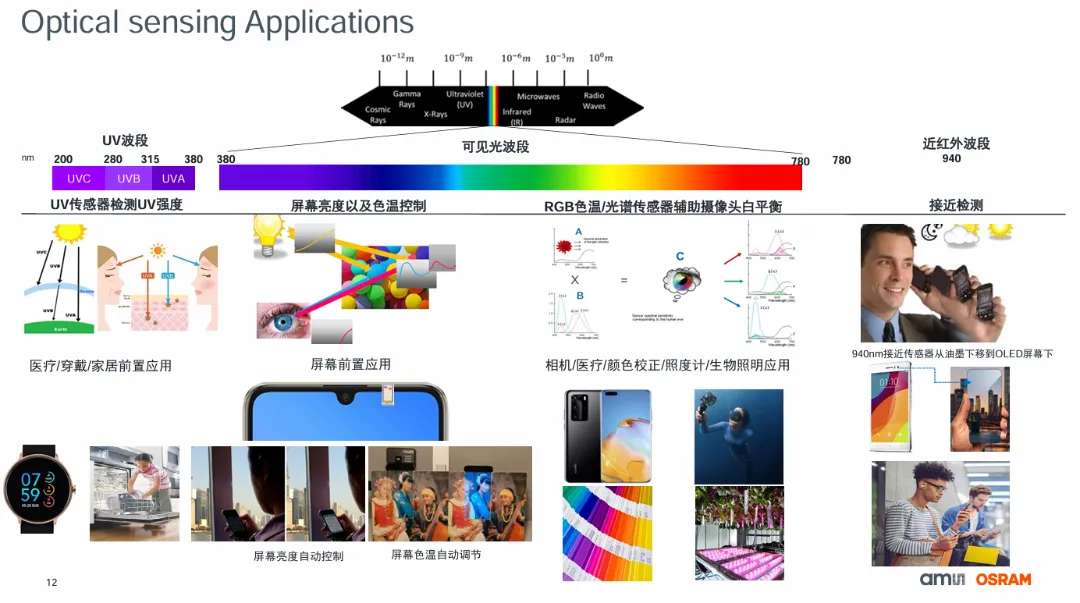
In addition, another widely used optical sensor in smartphones and professional cameras is the color sensor. In this niche product category, ams OSRAM is the first in the industry to adopt XYZ human-eye technology, applying the human eye's response to environmental light stimuli to chips, making the chip's light response closely resemble that of the human eye.
Furthermore, in digital cameras and smartphone cameras, color sensors can influence exposure time and other camera settings to adapt to different lighting conditions, enhancing photography results.
Beyond visible light, in the UV spectrum, ams OSRAM offers UV-A sensors for wearable devices like children's watches, helping monitor outdoor activity time. UV-C sensors are used in disinfection cabinets and water dispensers to monitor sterilization efficiency. Near-infrared proximity sensors are also widely used in smartphones and TWS earbuds for proximity and in-ear detection.
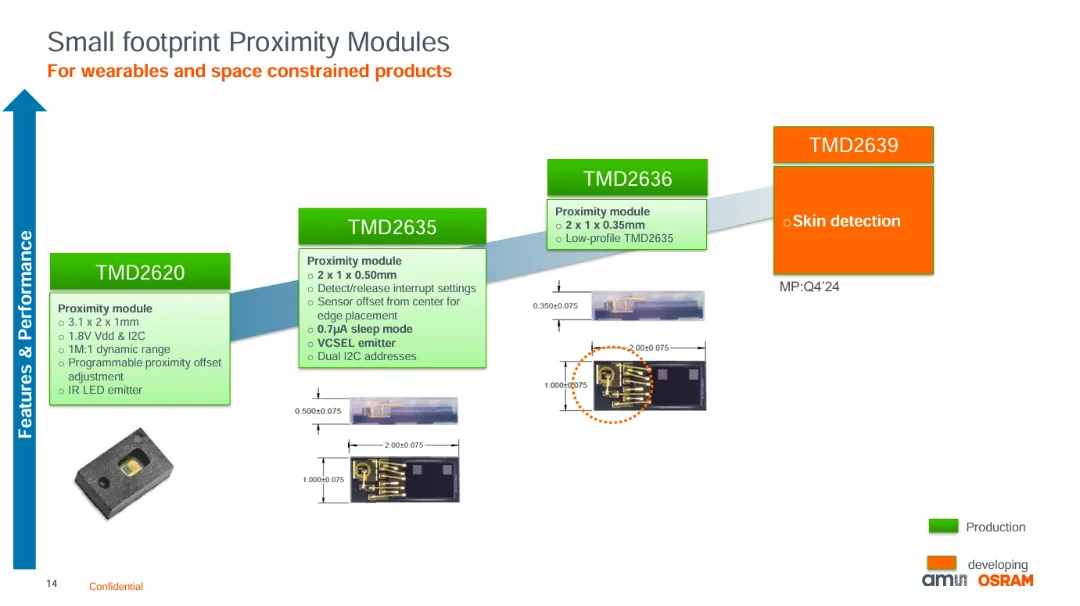
Since many TWS earbuds (e.g., when placed on a table) are prone to accidental touches, ams OSRAM has incorporated skin detection into its latest proximity sensor, the TMD2639, effectively solving this issue. This product is expected to be released within the next two years.
Article source: ams OSRAM WeChat Official Account Optical Phenomena